Social Media in Business
The advent of social media has not only resulted in a platform for networking, communication and CRM (Customer Relations Management) but has been a major destination of outsourcing for firms, which has served to effectively restructure business models. Social media can be classified as public social media and social enterprise tools – depending on if the media is used for company external or internal communication. Through keeping up an active dialogue with consumers companies can increase their customer awareness and create strategies more fitting to the markets needs and wants. In contrast to traditional market research, listening and interacting with customers though social media is free. Social media can also be used as a communication, collaboration and knowledge sharing tool within a company and with its business partners. Later on we will discuss the emerging importance of managing a virtual organization and present a case study of a social business community. The key to social media and the main reason behind its impact on business operation is that it levels the playing field allowing for interactive communication with all parties involved – customers, investors, partners and other stakeholders.
Social media can provide cost savings and improve efficiency in:
- Marketing – research, advertising and branding
- Product development – feedback, crowd sourcing
- Strategy development – knowing the customer
- Networking benefits – customers, partners and investors
- Enterprise tool – managing a virtual organisation, supporting collaboration and innovation
The top five business benefits of employing social tools identified in CompTIA's Social Business: Trends and Opportunities study are (Marketwatch.com, 2012):
- Better communication with customers, cited by 61 percent of responding companies
- Cost savings (51 percent)
- Brand positioning (49 percent)
- Real-time customer satisfaction (48 percent)
- Potential lead generation (43 percent)
CompTIA's Social Business: Trends and Opportunities study is based on a January 2012 online survey of 400 IT and business professionals in a variety of industries in the United States. The survey showed that 82 % of responding companies have a Facebook presence, 68 % have a Twitter profile and 68 % have a LinkedIn page. However, less than 20 % were using social enterprise tools at the time of the survey.
Social Networking in Marketing
It has been well documented and noted in all aspects of society the incredible rise of Social Media and its use by individuals, consumers and increasingly corporations. One of its biggest effects though that it is having is on the Marketing Strategies of companies that are targeting mainly young consumers who are using the internet and Social Networking sites more and more. To give an example of this, in 2009, Facebook had 130 million users, and at the end of 2011 it had over 850 million active users. There has also been a change in focus on who holds the power in the relationship between company and buyer because consumers now know that they can be reached and are waiting for companies to get in touch with them.
Changes to Advertising:
One of the most important aspects to any marketing campaign is a companies advertising, which has been changed dramatically. Adverts are now more customized to an individual more than ever before and more importantly are done so virtually. For example Ford has recently showed it is no longer using traditional advertising methods such as massive blitz on TV with celebrities promoting their cars or in house promotions. The American car company tapped 100 of the most successful bloggers and gave them a new version each of their Fiesta range for 6 months. However each ‘blogger’ was required to once a month to upload a video of the car onto YouTube and were encouraged to talk about it on their ‘Facebook’ and ‘Twitter’ accounts.
Papa John’s ran an aggressive campaign on Facebook to expand its business. It added 148,000 fans on the company’s own page through standardized advertising of its pizzas. It offered a free medium pizza to anyone who signed up to be its fan on Facebook. The promotion gained it thousands of new customers and drove up its Internet traffic by more than 253%.
Marketers and companies promoting their products online have followed a fairly standard strategy in the past, first buying digital ads and then building their own Web sites, and more recently amassing followers on social networks like Facebook and Twitter. It is unfair though that most people presume that most adverts are run through Facebook. For example, Coupon.com, one of the largest distributors of Coupons to online consumers runs adverts and is used on more than 500 retail and social networks, not just Facebook.
Companies are increasingly running online adverts that focus less on pitching their products than promoting their Facebook pages and Twitter accounts.
The adverts, which have menu tabs and resemble mini-Web sites themselves, allow users to click within the ads to see a brand’s Twitter messages or Facebook wall posts in real time, or to watch a brand’s video content from YouTube — all without leaving the Web page where the advert appears on. For example a recent advert placed online by the cleaning brand Mrs. Meyers, said, “Clean should smell better” and instructed users to “Hover to expand.” When a cursor is placed over the ad, it extends downward to expose an area that, depending on what button is clicked, displays real-time Facebook wall posts, Twitter users posting about Mrs. Meyers, or a video from the brand about Thelma Meyer, for whom the brand is named. This is having a tremendous affect. Google recently did a survey to find out how many people asked for these adverts to be removed and on average only 1/1000 had done so (Newman - 2011).
Companies are now encouraging their employees to post information, videos and promotions on their own social networking and social media sites. Grey Sky Films, a video production firm uses sites like MySpace and YouTube to show off its work and encourages it employees to spread their work. Both co-founders agree when they say, “Our policy is pretty simple: Keep it fun, interesting and appropriate.”
Communicating with customers and Relationship Management:
General opinion from surveys conducted seems to indicate that the main benefit of Social Media is the positive effect that it has on brand management. We also believe this to be true, however 70% of respondents suggested that engagement with consumers is one of the other main befits and what has changed the most. And this has affected mainly SME’s. One of New Zealand’s best selling wine company’s is a good example of this. Misha’s Vineyard, as they have been able to develop one-to-one relationships with wine journalists around the world – many of who write reviews which directly affects sales and rankings of the products that the company sells.
“Social media is one of the key trends in driving our business,” says Kira Wampler, a social media-marketing consultant at Intuit. “It is more than just pure marketing. It’s about fast connections with customers and building ongoing relationships.”
Increasingly, corporate titans such as Jet-Blue Airways, Coca Cola, Comcast and Whole Foods Market are using Twitter, the micro blogging social network as a way to communicate with their customers. The popular technology has helped companies quickly and cost effectively respond to complaints, answer questions and tailor products and services. It has supplemented current customer services, reducing the need / easing the load on calls centers. For example Lenovo has seen a 20% reduction in its call center activity in the USA over the last six months because nearly 50,000 customers go to its various community websites for information about laptops and ask questions to ‘experts’ and ‘helpers’ where possible.
Social Networks:
However it is not just twitter that is being used as a platform to help with customer service. Facebook, YouTube and online software services such as LiveOps, Salesforce.com and RightNow Technologies are all being used to improve customer service retain users and gain a competitive advantage.
Facebook has probably been the most famous company / social network that has been used by companies to advertise to customers, retain old ones and attract potential new consumers. Some of the most notable companies that are using Facebook include Ernst & Young, The Guardian, Zynga and also now many of the leading universities. Facebook is seen as a particularly powerful tool because if a company wants to target a specific audience it can. Take for example a wedding dress company that is based in Hong Kong. It can go to Facebook, ask its advert to be publicized to only females who are from the ages of say 20 – 50 and have their status as “engaged”. The effects on Marketing are that we are seeing a considerable shift away from traditional methods to modern, technology methods.
Effects on Branding:
Social Media has upended how consumers engage with brands and how companies now in turn brand themselves, which is dominated by the Internet. We believe in a way that it is transforming the economics and fundamentals that are required for successful marketing and branding and making traditional strategies simply not possible anymore. Today consumers are promiscuous with their brand relationships. For example, previously, when buying a car, one would have gone to the local dealer and probably would have been reeled in by the salesman and he would have made a sale. However in this new modern day, we connect with myriad brands, through media channels that are beyond the control of the manufacturer and also the salesman. After we buy a product, we do so much more than just use it. We remain aggressively engaged, publicly promoting the product through status updates on social networking site, which is essentially collaborating in the brands development. This is where we believe branding is so significant and has had its biggest effect since the rise of Social Media.
From a company’s point of view, what have changed the most is what the customer views as important and the journey, as well as its length in deciding which brand to choose from. Previously, customers would have spent a lot more time considering what and when to buy a product. However now, generally consumers take a iterative and less reductive journey of four stages: considering a product, evaluating, enjoying and advocating it. It is the last stage, advocating which has most affected businesses in modern day, and social media is the reason why. For example, more than 60% of consumers of facial skin care products do online research about them after purchase and then comment on the results that they find.
Word of mouth: the best form of modern day advertising?
A recent study by a marketing consulting company has found out that up to 90% of spend goes to advertising and retail promotions. Yet the single most powerful impetus to buy is someone else’s advocacy and positive word of mouth promotion about a product. Consumers often get annoyed because they are bombarded with adverts, so companies are now acknowledging this and offering you a reward if you recommend that company to a friend. For example, Qatar Airways will give you a minimum of a 25% discounts on your international flights if you get a friend or family member to book a flight with them and then sign up to their loyalty program. The company hopes that this would then set of a chain of events and messages from one and other to spread what is supposed to be good word of mouth advertising. The cheapest and arguably the best form of advertising. According to Florida and Goodnight (2005) the way that companies are trying to maximize this potential is by focusing on what they call “Creative Capitol”, simply put, an arsenal of thinkers whose ideas can be turned into valuable products and services. They also say that technology and its advancements has meant that the distance between the CEO and the final consumer of all companies, of all sizes is getting smaller, because Social Media has made consumers demand more personalized responses and attention from companies senior management.

Image and crisis management
It is difficult to speak about the effect of Social media on business without looking at its effect on businesses’ approach to crises, and their use of this platform to shape their image to consumers.
According to Soder Chuck (2011), social media is a force which even the smallest companies cannot ignore anymore. Social media now provides a platform through which companies can directly and quickly get information out to its audiences in the event of a crisis.
It is unlikely that anyone here is unfamiliar with the fact that, as previously mentioned, over 80% of companies now have an online presence or facebook page. These pages are often used as tools to maintain the image of a company in the event of a crisis. In the entertainment industry, celebrities and figures of importance are often quick to take to twitter or facebook to respond to claims made against them, or to rectify rumours and concerns of the public. Many would be familiar with the 2009 Tiger Woods scandal, and his statements on twitter apologizing to the public and taking full responsibility for some of the issues which arose from his affairs.
The CEO of BP apologized formally on youtube to the public concerning the oilspill in the gulf of Mexico. Link can be found here.
Dowell, (2010) actually refers to a similar issue where guitarist John Mayer was racially inappropriate in an interview, and used this to point out how twitter has become a platform for celebrities to rectify issues and manage their images, just like full on businesses do. Below is a video by Chris Brown, apologizing to his fans and to Rihanna after the incident in which he assaulted her.
“Social media, on a whole, is becoming a medium for work as well as play.” (Nigel Wright Recruitment 2011)
It is unlikely that anyone here is unfamiliar with the fact that, as previously mentioned, over 80% of companies now have an online presence or facebook page. These pages are often used as tools to maintain the image of a company in the event of a crisis. In the entertainment industry, celebrities and figures of importance are often quick to take to twitter or facebook to respond to claims made against them, or to rectify rumours and concerns of the public. Many would be familiar with the 2009 Tiger Woods scandal, and his statements on twitter apologizing to the public and taking full responsibility for some of the issues which arose from his affairs.
The CEO of BP apologized formally on youtube to the public concerning the oilspill in the gulf of Mexico. Link can be found here.
Dowell, (2010) actually refers to a similar issue where guitarist John Mayer was racially inappropriate in an interview, and used this to point out how twitter has become a platform for celebrities to rectify issues and manage their images, just like full on businesses do. Below is a video by Chris Brown, apologizing to his fans and to Rihanna after the incident in which he assaulted her.
It is difficult to overlook the vast effect that social networking has had on crisis and image management for businesses.
Your task for today is to:
“ Formulate a way to use Social Media to manage the given crisis and salvage your company’s image. Feel free to include out of the box ideas like logo changes and donations, and publicizing these through social media”
“Social media, on a whole, is becoming a medium for work as well as play.” (Nigel Wright Recruitment 2011)
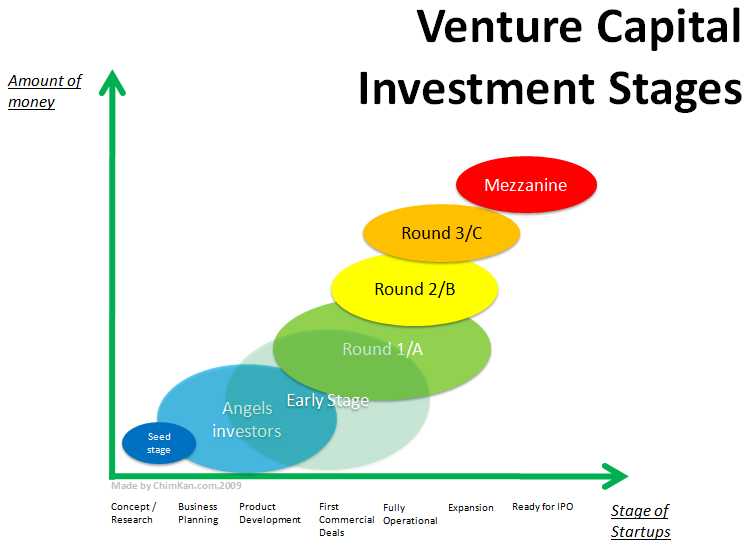
‘Word-of-mouth’ by using Interactive Social Media http://www.mbaknol.com/wp-content/uploads/2010/09/venture_capital_stages_of_financing_mbaknol.jpg
How Social Media Has Changed Start-up Market Entry Strategies
Entrepreneurship and innovation are hot topics in business today and social media has provided start-ups with a platform and a set of tools. Below, we have highlighted the revolution social media has brought to the different stages of a start-up, from idea generation to market entry.
Product and business model development
Social media provides the entrepreneurs a channel, through which he can communicate with consumers to review marker tastes, and test and develop his product based on the feedback. For a business idea and a start-up to be successful reevaluation and early development of a product or business model is essential. After all, if progress is too slow you will wither run out of money or be surpassed by a competitor. Social media is a cheap way for companies to research the market and get early evaluation of the viability of the venture.
There are many social networking sites out there aimed specifically at the entrepreneur-investor community where entrepreneurs can find industry peers and investors for inspiration, research and support. Post-launch of their businesses, many entrepreneurs will say that in the early stages, the greatest resource and support they experienced was inspiration – inspiration to keep going as well as inspiration on how to develop the product and reach the market. One such entrepreneur, Filip Mlekicki from Chromosense LLc, stated in an interview with OpenIDEO (openideo.com, April 2012) that being surrounded by likeminded and entrepreneurs in the same stages was the most inspirational, whereas mentors and incubators mostly tended to put limits on his ambitions. When faced with the long road of hard work ahead of you many entrepreneurs might lose faith in their abilities or idea and chose not to take the business further.
Ultimately, making use of social media in the initial stages helps the start-up to evaluate the product from the eyes of the consumer to become aware of the market and develop the product accordingly. The benefits to networking and keeping up a social media presence also apply when it comes to finding peers, mentors and investors that can help you see your business idea and model in a new light. Compared to earlier generations of entrepreneurs, these networks are now larger (no geographical constraints) and easier to maintain thanks to increased interaction through social media both for private and professional purposes.
(For anyone interested a list of social networks can be found here)
Funding
When it comes to raising capital an entrepreneur generally puts in his own savings and contributions from FFFs (friends, family and fools). If the entrepreneur is lucky enough, he will find a business angel to invest seed capital and act as a mentor. In later stages – when larger sums need to be invested and the company has proven its potential – venture capitalist step in to fund the start-up.


Networking has always been vital when it comes to funding, and can be a very lengthy process in itself – one that requires communication and networking skill as well as reassessment and development of the product/business model when getting investor feedback. Social networking thus offers another benefit besides from the earlier discussed marketing and customer relations aspect. There are several social networking communities out there where entrepreneurs and investors can meet to present and discuss business ideas. This allows entrepreneurs, business angels and VCs to approach potential partnerships beyond the geographical limits. Being active in social media and creating brand awareness early on in the start-ups life can potentially speed up the funding process as well as it allows for earlier reassessment of the business model based on investor feedback.

Illustration from: http://www.netoutlet.com/investment-based-crowdfunding-looks-set-to-become-legal-in-the-us/
Many start-ups become painfully aware of the funding gap between the initial investment and VC funding, especially if the entrepreneur is struggling to find a business angel willing to invest. An emerging social media tool that offers an alternative to seed financing is ‘crowdfunding’. Crowdfunding is a way of crowdsourcing where the start-ups can offer equity or other rewards for people willing to contribute to the capital needed. The industry is still in the infant stages but companies such as Indiegogo, Kickstarter , Sponsume and Grow VC are offering crowdfunding platforms. The U.S. JOBS Act signed earlier this spring will allow for the industry to develop into a real alternative for start-ups seeking financing. (More information on crowdfunding and the JOBS Act)
Market entry and brand building
Just as social media gurus recommend already established companies to utilize social media to improve their brand image, start-ups have a lot to gain from social media presence and brand building. For market entry, the earlier a start-up can get its brand out to the public and present its product the better. By creating an interesting social media profile – private or professional – the entrepreneur can reach out to its target audience and create a customer base even before the formal market entry. Early brand awareness can then result in early market adoption and a more successful market entry.
Flirty Cupcakes is a company that started out with a very innovative marketing strategy in 2009. The business idea itself was to set up a portable bakery by selling freshly baked cupcakes from a van. Every morning the van would drive to a new location, set up shop for a couple of hours and then drive off to another location. The truly innovative part of this story however is in the use of social media. By tweeting and ‘facebooking’ its location customers (old and potential) would then know where to go to find the cupcake van. This marketing strategy was a success with the customers and differentiated Flirty Cupcakes from other bakeries. Additionally, by actively interacting with the public the bakery constantly got feedback and suggestions on different flavours, giving them the chance to respond to customer needs. Eventually the start-up was profitable enough to invest in café/bakery and today it runs both. This story also highlights the value of embarking on unconventional marketing campaigns through the use of social media.
Social Networking in Job Hunting
Networking
Even though other forms of job recruiting such as internet job boards are becoming more prevalent, the number one method of recruiting by employers is still word of mouth networking. Therefore, even if job seekers are not directly using their profiles to be recruited, they may use their social media sites to networks with other. In many ways, social media tools are just ways to more efficiently tap the networks a person already has. (Green LMI 2011)
When employers use social media to review candidates it is shown that 15.5% of them look to see if they have a strong/appropriate network and 12.1% search for references. Therefore, even after using their networking skills to acquire an interview, it is still important for a candidate to have a strong network represented in their social profiles. (Green LMI 2011)
Searching for Jobs
Using internet job boards and social media sites to find and apply for jobs is becoming more prominent. 24% of people in 2011 stated that they used blogs and other social networking sites to look for jobs. And 28% of people thought that it was essential to be active in social media in order to advance their careers. (Kelly 2011)

The lack of a job seeker having a presence in social media can be harmful to them. This limits their ability to be found as well as limits the opportunities which they can seek. Conversely, as long as it is used responsibly, it is not harmful for them to have an online presence. In fact, in certain industries, having a presence in social media is very beneficial and in some cases required. Some of these industries include: Marketing, information technology, recruitment, public affairs and communications. Not only will their skills in social media help them to find employment, it may carry into their responsibilities as a full time employee.
Reviewing Experience
Where job seekers use social media to search for and be recruited for job, they also use it to review their experiences. Firms must keep in mind that their interviewing and recruiting processes reflect back upon them. It is another form of marketing. Therefore if a candidate has a good interview experience, they may share this over their networks. However, if they have a negative experience, then there is an even higher likelihood that they will share it. Once information is in the social media network, it has the potential to go viral. Therefore, employers should be cautious regarding how they treat job candidates. (Easier 2012)
Social Media in Recruitment
Recruiting Candidates
As the popularity of Social Media increases, so does its usefulness for employers. It is becoming more and more common for employers to seek out job candidates using social media networks; especially in large firms (>100 employees). Roughly 45% of large firms stated that they use social media to find and recruit employees. When asked about future use of social media to recruit employees, 28.6% of firms stated an intention of increasing their utilization. (Green LMI 2011)
Out of the firms that use social media for recruiting, 74% of them use LinkedIn as their primary resource.

This is followed by 7.7% and 3.8% using Facebook and Twitter respectively. LinkedIn is viewed as a more professional version of social media and is therefore taken more seriously by employers. Many perceive it as an online resume which has the ability to track their network. (Green LMI 2011)
It has been concluded by many recruiters that often, the best candidates for the job are those who promote themselves well and therefore prefer to be found rather than apply on their own. Therefore, tools such as social media are becoming more important in the search. Recruiters need to become more proficient in the use of these networks which provide a database of potential employees which can be filtered and sifted through. (Nigel Wright Recruitment 2011)
Eric Lefkofsky, the founder of Groupon, stated, “To me, no one has fully cracked the code on social recruiting yet. If and when the code is cracked, it would pay for job seekers to be prepared.”
Reviewing Applicants
An increasing number of employers are using social media sites to evaluate potential employees and job applicants. As of 2011, 27.2% of employers said that they evaluate and determine whether to hire new job candidates using tools such as Facebook and Linked in. When asked about their future use of social media for this purpose, 25.9% showed that they intended to increase their use while 65.8% stated they would at least stay the same. (Green LMI 2011)
Employers who use social media have stated that some of the key factors they are looking for in an applicant’s profile are: Presenting themselves appropriately, experience, communication skills, appropriate friend/network, references, highlighted skills, professionalism and resume. (Green LMI 2011) Therefore, when a person posts inappropriate, discriminatory or negative pictures and comments on their social media profiles can really stand out upon review by potential or current employers. (Green LMI 2011)

As stated above, LinkedIn is seen as a professional social media site compared to those such as Twitter and Facebook whose key purpose is social interaction. However, this distinction is not always taken into consideration by employers. Roughly 60% of firms that use social media in their review process have stated that a candidates profile pages have the potential to have a negative impact on a hiring decision. However, conversely, approximately 70% report that their online presence can have a positive effect. (Green LMI 2011).
Potential Ethical Issues
Judgment of Content
The use of social media by employers to review candidates is a new concept. Therefore, issues in determining its ethical integrity are still up in the air. When an employer is reviewing a potential job candidate’s media page, let’s say Facebook, where is the line drawn to determine what is innocent fun and what is grounds for dismissal? If a candidate has a picture posted of them at a party, does that mean they were just having fun or that they are irresponsible people who would create and unprofessional work environment? (Thomas 2012)
Unintentional Discrimination & Bias
A second issue that arises when an employer searches a candidate’s personal pages is finding additional information. In some ways this may be a good thing. You may discover that they have extra skillsets or experiences that have not been listed on their resume. However, other information found may cause unintentional bias. For example, an employer may find that their female candidate is pregnant. It is illegal for employers to discriminate against pregnancy. Yet, finding this information, which may be inconvenient to employers, may cause an unintentional bias. The same issue can occur for race, gender and religion as well. (Bacon Wilson Law 2011) In addition to these demographic factors, recruiters may also discriminate based on factors such as what school the candidate attended or previous employers. When searching through social media profiles, an employer can filter on factors such as these. This has caused some job seekers to feel discriminated against, and therefore they believe being recruited face to face by a recruiter gives a more fair representation (Nigel Wright Recruitment 2011).
Because of these potential discriminatory issues, 26% of people are afraid that their networks will have an adverse effect on their careers. In addition, 33% of people say that they deliberately censor what is on their social networking sites to avoid potential career problems. (Kelly 2011).
Enterprise 2.0.
Enterprise 2.0. is the concept of Web 2.0 and collaboration though social networks in business processes company internally or with its external business partners and customers. As mentioned, social media tools can be used in internal business processes. According to the survey presented earlier less than 20 % of the 400 IT and business executives surveyed were using social enterprise tools at that point in time. Social media for external use (with the public) however was significantly more common with 84 %, 68 % and 68 % for Facebook, Twitter and LinkedIn respectively (CompTIA, 2012).
People’s positive preference for social media for private use, especially social networking services, has made corporate software providers are increasingly adopting the same kind of social tools into their intranet software. Just like public social media changed the way people communicate with each other, companies and even authorities and levelled the playing field to the advantage of the grassroots social enterprise software also aims to revolutionise daily communication. Company internal communications involves daily interaction, team work and collaboration as well as knowledge sharing. In a modern environment where a significant amount of work is done in virtual teams the quality of the management tools will directly affect the performance of the individuals. A study on the performance of dispersed virtual teams showed that, more so than the level of dispersion, the task related processes (e.g. project management tools for coordination and monitoring) have a greater impact on the success of the team (Sierdrat et al, 2009). The authors also conclude that incorporating high quality task-related processes, such as interactive work tools and an attainable knowledge pool, is key in setting up an environment where teams can perform to their full potential.
In the knowledge based business environment organisational learning and knowledge management are significant challenges when it comes to developing a company’s competitive advantage (Kasper and Haltmeyer, N/A). Knowledge sharing and knowledge transfer are intangible processes of how to utilize and retain the knowledge gathered by employees and the company. As knowledge is intangible the challenge consists of how to document, share and reuse knowledge accumulated over time and when key employees leave the organisation. Additionally, knowledge sharing and collaboration are often seen to contribute to innovation. An open, transparent and collaborative culture created by use of interactive enterprise tools can thus spur innovation and organizational learning and sustain competitive advantage (Law and Gunasekaran, 2009). Next we will consider the case of Cognizant to show practical knowledge management attempts through social enterprise media.
Cognizant is an IT and business consulting company that recently was revised by Ivy Business Journal on it successful incorporation of social media in its business operation. Cognizant developed and introduced a social intranet to support communication, dialogue, collaboration and knowledge sharing. In the intranet employees blog about projects and maintain an active dialogue of sharing experiences and suggestions to challenges. To incentivize the employees to adopt the new process and encourage both consumption and contribution to the content, the level of use was introduce in their assessment scheme. Employees get the equivalent to ‘frequent flyer points’ for participating and more senior managers get rated on their usage of the tool on different projects. Additionally, the team behind a project gets recognition if they are the top users of social technologies.
Cognizant also started a similar community with with all its employees, executive clients, business partners and industry experts (including academics). The members get to share experiences, best practices and discuss industry news. The community was well received by the participating parties since they value the opportunity to network with their peers. Thus, Cognizant has a company internal platform for content-in-context when it comes to knowledge management and a professional network with many of its industry peers. “… employees learn from each other, resulting in more effective client projects; project and industry knowledge is shared with Cognizant’s business partners; and Cognizant, in turn, learns from clients and industry experts about what is happening in the marketplace.” (Iyer et al, 2011)
Cognizant also started a similar community with with all its employees, executive clients, business partners and industry experts (including academics). The members get to share experiences, best practices and discuss industry news. The community was well received by the participating parties since they value the opportunity to network with their peers. Thus, Cognizant has a company internal platform for content-in-context when it comes to knowledge management and a professional network with many of its industry peers. “… employees learn from each other, resulting in more effective client projects; project and industry knowledge is shared with Cognizant’s business partners; and Cognizant, in turn, learns from clients and industry experts about what is happening in the marketplace.” (Iyer et al, 2011)
By facilitating communication, collaboration, knowledge sharing and innovation social enterprise tools can improve the performance and organisational learning of companies essentially improving their competitive advantage. Considering the documented benefits of virtual teams (given the right practical tools as well as open environment) and the increasing impact of globalisation on work practices, social enterprise tools will most likely bring with them a new platform for business communication spiralling the development of the virtual organisation.
Conclusion
According to the BBC, the speed at which ideas can be generated, tested and brought to fruition is accelerating faster than we could have anticipated - largely because of the explosion of social media and mobile and cloud computing (BBC, 2012).
Over the next decade, the process of sharing and developing ideas will be dramatically accelerated by the advance of these relatively young technologies having a major impact on the way products and services are brought to market, businesses are structured, job roles are created and talent is attracted, rewarded and retained. Social networks are transforming how we as individuals interact with one another, and even how businesses interact with their audiences.
References
- Chuck, S. (2011). Crain's Cleveland Business, 7/11/2011, Vol. 32 Issue 28, p0015-0015, 1p.
- Dowell, J. (2010). Twitter: Now for celebrity apologies. http://technorati.com/entertainment/celebrity/article/twitter-now-for-celebrity-apologies/
- Edelman, D. 2010. Journal of Branding. Branding in The Digital Age: You’re Spending Your Money In All the Wrong Places.
- Florida, R. and Goodnight, J. 2005. Harvard Business Review. Managing for Creativity.
- Green LMI. 2011. “Social Media Trends with Silicon valley Employers.” BW Research Partnership. <http://iis-db.stanford.edu/evnts/6637/Philip_Jordan_Social_Media_Trends_with_Silicon_Valley_Employers.pdf>
- Iyer, B., Parise, S,. Rajagopal, S. and Davenport, T. H. (2011) Putting Social Media to Work at Cognizant, Ivy Business journal, July/August 2011 (Accessed April 16, 2012) http://www.iveybusinessjournal.com/topics/strategy/putting-social-media-to-work-at-cognizant
- Interview with web entrepreneur Filip Mlekicki from Chromosense LLc, http://www.openideo.com/open/web-start-up/inspiration/another-interview-from-a-web-entrepreneur/ (Accessed April 16, 2012)
- Kasper, H. and Haltmeyer, B. (N/A) Knowledge Management and Organisational Learning in MNC’s, Vienna University of Economics and Business Administation.
- Kelly Global Workforce Index. 2011. “Social Media/Networking: The Evolving Workforce.” <http://www.easyir.com/easyir/kellyservices/KGWI_Social%20Networking_report.pdf>
- Law, K. M. Y. and Gunasekaran, A. (2009) Dynamic organizational learning: a conceptual framework, Industrial and Commercial Training, Vol 41, No 6 2009, 314-320, Emerald Group Publishing Limited.
- Newman, A. 2011. The New York Times. Brands Now Direct Their Followers to Social Media. Available (Online):http://www.nytimes.com/2011/08/04/business/media/promoting-products-using-social-media-advertising.html. Accessed on 02/04/2012
- PR Newswire (2012). http://www.marketwatch.com/story/expanding-social-presence-can-have-positive-impact-on-business-operations-new-comptia-study-finds-2012-03-19
- Marketwatch.com, 2012. CompTIA survey. http://www.marketwatch.com/story/expanding-social-presence-can-have-positive-impact-on-business-operations-new-comptia-study-finds-2012-03-19
- BBC, 2012. Google: Mobile, social, cloud changing the way we work. http://www.bbc.co.uk/news/business-16858085
- “Social Media’s Effect on Recruitment.” 2012. Easier Technology. < http://www.easier.com/100183-social-medias-effect-on-recruitment.html>
- Stroud, Jim. 2012. “Should Recruit’s Social Media Presence Impact Hiring?” The Recruiters Lounge. <http://www.therecruiterslounge.com/2012/03/14/should-recruits-social-media-presence-impact-hiring-decision/>
- “The Impact of Social Media on Recruitment.” 2011. Nigel Wright Recruitment. <http://www.nigelwright.com/Assets/Documents/TheImpactofSocialMediaonRecruitment.pdf?1332156135>
- Porter, M. E. (1996) What is strategy? Harvard Business Review, November-December, 61-78, The value chain.
- Siebdrat, F., Hoegl, M. and Ernst, H. (2009) How to Manage Virtual Teams, MIT Sloan Management Review, Summer 2009, 63-68.